
Last Tuesday, I was sitting in my car before a difficult meeting, heart racing, palms sweating, mind spinning through worst-case scenarios. I had fifteen minutes before I needed to walk in. I couldn’t make the anxiety disappear, but I could change how my body was responding to it.
Here’s what actually works: Box breathing (inhale for 4, hold for 4, exhale for 4, hold for 4). 4-7-8 breathing (inhale for 4, hold for 7, exhale for 8). Diaphragmatic breathing (deep belly breaths that engage your diaphragm instead of shallow chest breathing). Alternate nostril breathing (breathing through one nostril at a time). Each takes 2-5 minutes and directly calms your nervous system by activating your parasympathetic response.
This guide gives you 6 proven breathing exercises for anxiety and stress with exact step-by-step instructions, when to use which technique based on what you’re dealing with, the science behind why breathing exercises work, and how to practice them correctly so you actually get the calming effect.
Why Breathing Exercises Actually Work
Before we get to the techniques, here’s why controlling your breath changes how you feel.
Your breathing directly controls your nervous system. When you’re anxious or stressed, your sympathetic nervous system activates: heart rate increases, breathing becomes shallow and rapid, and muscles tense. This is your fight-or-flight response.
Slow, controlled breathing activates your parasympathetic nervous system – the rest-and-digest mode. Your heart rate slows, blood pressure drops, muscles relax. You’re physiologically switching from threat response to calm response.
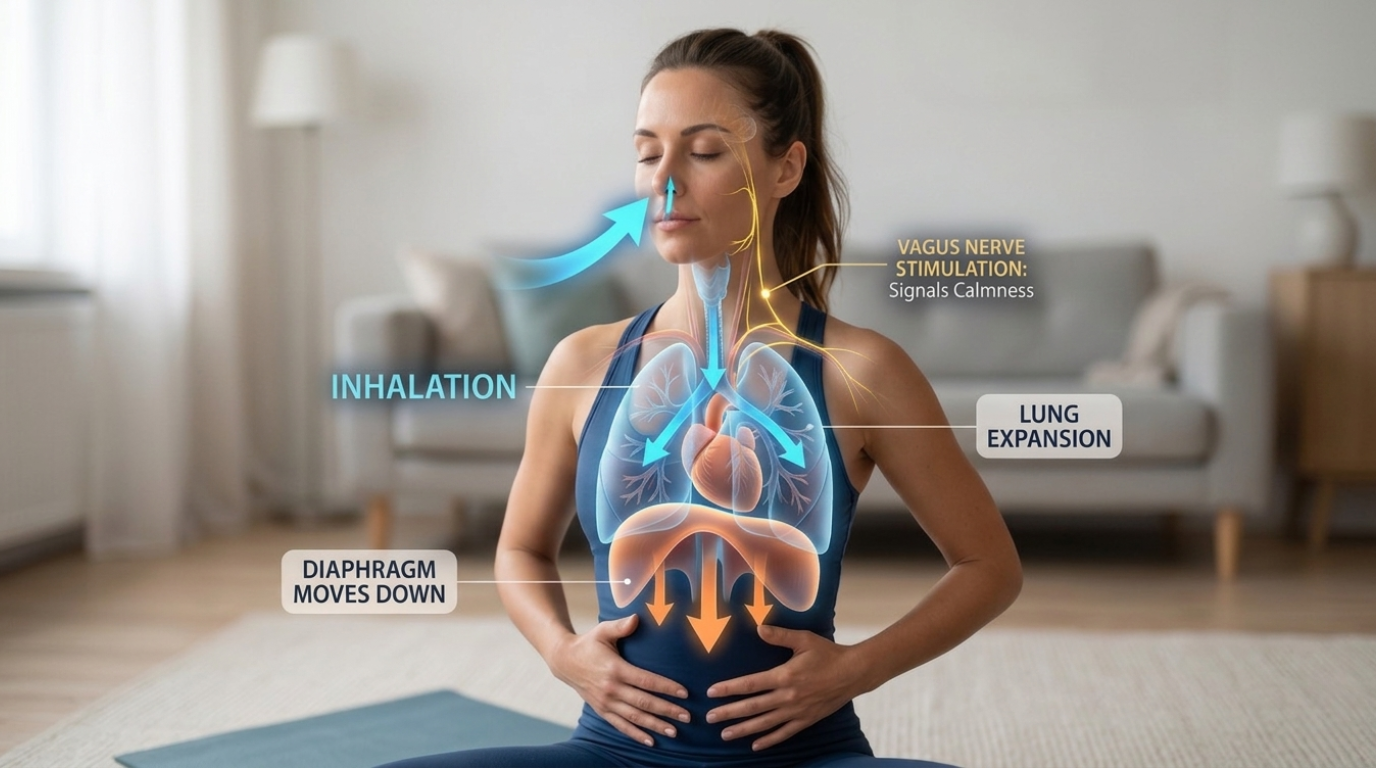
This isn’t placebo. This is measurable biology. Deep breathing exercises stimulate the vagus nerve, which runs from your brain to your abdomen and controls your parasympathetic response. When you breathe slowly and deeply, you’re sending direct signals to your brain that you’re safe.
The benefits of breathing exercise are immediate. Within 60-90 seconds of controlled breathing, you can feel your heart rate slow and tension decrease. With regular practice, breathing techniques become even more effective because you’re training your nervous system to shift more easily.
Box Breathing (4-4-4-4 Technique)
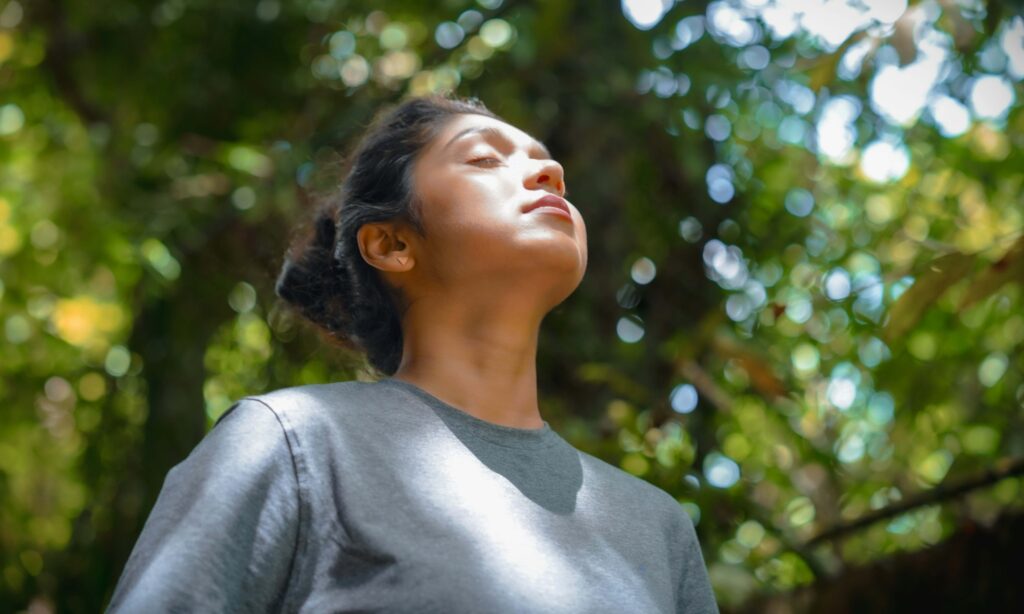
This is the most versatile breathing technique. Navy SEALs use it before high-stress situations. I use it before difficult conversations or when anxiety spikes.
How to do it:
- Sit comfortably with your back straight.
- Inhale slowly through your nose for a count of 4.
- Hold your breath for a count of 4.
- Exhale slowly through your mouth for a count of 4.
- Hold your lungs empty for a count of 4.
- Repeat for 5-10 cycles (about 2-3 minutes).
When to use it: Acute anxiety, before stressful events, when you need to calm down quickly, panic attack prevention.
Why it works: The equal counts create rhythm and predictability, which helps anxious minds. The breath holds increase CO2 tolerance, which reduces the feeling of breathlessness that often accompanies anxiety.
If you’re incorporating breathing into a meditation practice, our guide on how to meditate explains how breath-focused techniques form the foundation of most meditation styles.
4-7-8 Breathing (The Sleep Technique)
This breathing strategy was developed by Dr. Andrew Weil. It’s specifically effective for falling asleep or calming severe anxiety.
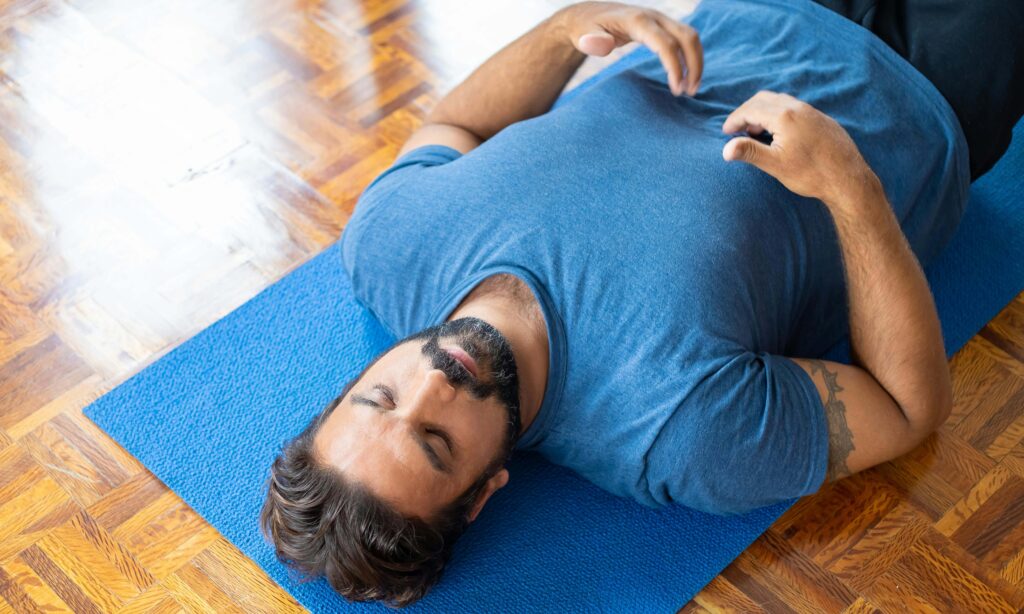
How to do it:
- Place the tip of your tongue against the ridge behind your upper front teeth. Keep it there throughout.
- Exhale completely through your mouth, making a whoosh sound.
- Close your mouth and inhale quietly through your nose for a count of 4.
- Hold your breath for a count of 7.
- Exhale completely through your mouth for a count of 8, making the whoosh sound.
- Repeat the cycle 4 times total.
When to use it: Before sleep, during insomnia, when anxiety is preventing rest, when you need deep relaxation.
Why it works: The extended exhale (8 counts) activates your parasympathetic nervous system more strongly than the inhale. The breath hold allows oxygen to fully circulate. The tongue position and whoosh sound create focus points that distract from anxious thoughts.
Diaphragmatic Breathing (Belly Breathing)
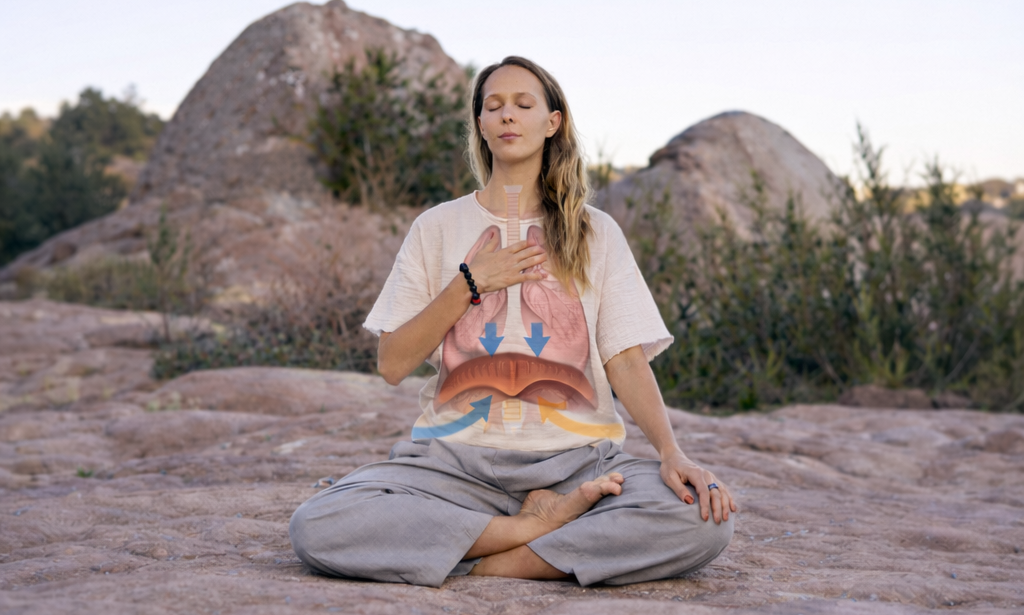
Most people breathe shallowly from their chest. Deep breathing exercises engage your diaphragm – the muscle below your lungs – which creates fuller, more oxygenating breaths.
How to do it:
- Lie down or sit comfortably with one hand on your chest and one on your belly.
- Breathe in slowly through your nose, directing the breath into your belly (not your chest). Your belly hand should rise while your chest hand stays relatively still.
- Exhale slowly through your mouth or nose, feeling your belly fall.
- Continue for 5-10 minutes, focusing on belly movement rather than chest movement.
When to use it: Chronic stress, as a daily practice, to retrain your breathing pattern, before meditation.
Why it works: Diaphragmatic breathing delivers more oxygen with less effort, reduces the work of breathing, slows your heart rate, and can lower blood pressure. It’s the foundation of most breathing techniques for anxiety and stress management.
Research published in the National Institutes of Health database shows that diaphragmatic breathing significantly reduces cortisol levels and improves attention and stress management.
Alternate Nostril Breathing (Nadi Shodhana)
This comes from yoga tradition but has measurable physiological effects. It balances your nervous system and calms mental chatter.
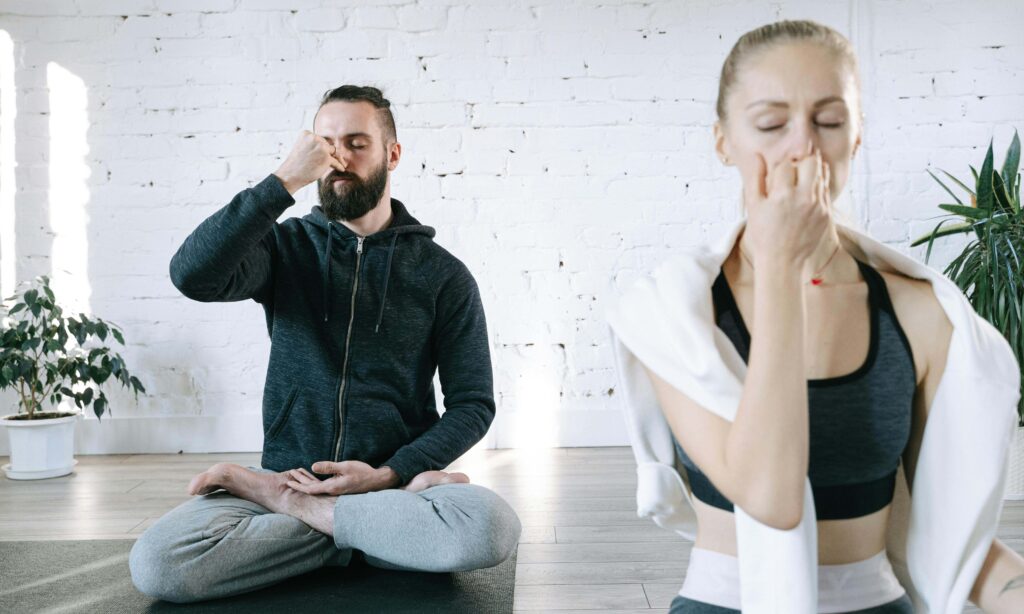
How to do it:
- Sit comfortably with your spine straight.
- Use your right thumb to close your right nostril.
- Inhale slowly through your left nostril.
- Close your left nostril with your right ring finger, release your right nostril.
- Exhale through your right nostril.
- Inhale through your right nostril.
- Close your right nostril, release your left nostril.
- Exhale through your left nostril.
- This completes one cycle. Repeat for 5-10 cycles.
When to use it: Mental overwhelm, racing thoughts, when you need mental clarity, as part of a morning routine.
Why it works: Alternating nostrils balances activity between the left and right hemispheres of your brain. It forces slow, controlled breathing and gives your mind something specific to focus on, which interrupts anxious thought patterns.
Physiological Sigh (Quick Reset)
This is the fastest breathing exercise for immediate anxiety relief. Stanford neuroscientist Dr. Andrew Huberman researches this extensively.
How to do it:
- Take a deep inhale through your nose.
- Without exhaling, take a second shorter inhale to fully fill your lungs.
- Exhale slowly and completely through your mouth with a sigh.
- Repeat 1-3 times as needed.
When to use it: Immediate stress response, panic moments, crying recovery, any time you need instant calm.
Why it works: The double inhale re-inflates collapsed air sacs in your lungs and removes built-up CO2. The long exhale activates your calm response. This is the fastest way to physiologically shift from stress to calm.
Counted Breathing (Simple Anxiety Relief)
When you’re too anxious to remember complex patterns, this simple technique works.
How to do it:
- Breathe in for a count of 4.
- Breathe out for a count of 6.
- That’s it. Repeat for 2-3 minutes.
When to use it: Acute anxiety, when other techniques feel too complicated, in public settings where you need to be discreet.
Why it works: Making your exhale longer than your inhale activates your parasympathetic nervous system. The counting gives your mind something to focus on besides anxious thoughts.
How to Practice Breathing Techniques Correctly
Start with 2-3 minutes, not 20. You’re training a skill. Short, consistent practice beats long, occasional sessions.
Focus on the exhale. The exhale is where the calming happens. Making it longer and slower than the inhale maximizes the effect.
Don’t force the breath. If any technique makes you feel dizzy or more anxious, stop. Breathing exercises should feel calming, not stressful.
Practice when you’re calm first. Don’t wait until you’re having a panic attack to try these for the first time. Practice daily when you’re relatively calm so the techniques are familiar when you actually need them.
Pair with body awareness. Notice where you hold tension – jaw, shoulders, stomach – and consciously relax those areas while breathing.
Use them preventively. Don’t wait until anxiety is at 10/10. Use breathing strategies when stress is at 4/10 or 5/10 to prevent escalation.

When to Use Which Breathing Exercise
For immediate anxiety relief: Physiological sigh or box breathing
For panic attacks: Box breathing or counted breathing
For falling asleep: 4-7-8 breathing
For chronic stress: Diaphragmatic breathing (daily practice)
For racing thoughts: Alternate nostril breathing
For pre-event nerves: Box breathing
For general daily practice: Diaphragmatic breathing or any technique that feels natural
You don’t need to master all of these. Pick 2-3 that resonate and practice them consistently. I use box breathing before stressful situations, 4-7-8 for sleep, and diaphragmatic breathing as my daily baseline practice.
If you’re building a complete morning wellness routine, combining breathing exercises with our 5 minute morning meditation creates a powerful practice for starting your day calm and focused.
Frequently Asked Questions
Q: What are the best breathing exercises for anxiety?
A: Box breathing (4-4-4-4 pattern) and the physiological sigh are most effective for acute anxiety. Box breathing involves inhaling for 4 counts, holding for 4, exhaling for 4, and holding for 4. The physiological sigh is a deep inhale followed by a second quick inhale, then a long exhale. Both immediately calm your nervous system by activating your parasympathetic response.
Q: How do breathing techniques help with stress and anxiety?
A: Breathing techniques for anxiety work by directly controlling your autonomic nervous system. Slow, deep breathing stimulates the vagus nerve, which activates your parasympathetic (calm) response and deactivates your sympathetic (fight-or-flight) response. This measurably lowers heart rate, reduces blood pressure, and decreases stress hormones within 60-90 seconds.
Q: What’s the difference between deep breathing and regular breathing?
A: Deep breathing exercises engage your diaphragm and fill your lungs completely, delivering more oxygen with each breath. Regular breathing is often shallow chest breathing that only uses the upper portion of your lungs. Deep breaths activate your calming response, while shallow breathing can actually increase anxiety by triggering stress signals.
Q: Can breathing exercises stop a panic attack?
A: Breathing exercises for stress can reduce panic attack intensity and duration but may not stop one completely once it’s started. The most effective approach is using breathing techniques when you first notice anxiety escalating (before full panic). Box breathing or counted breathing (inhale 4, exhale 6) are most helpful during panic because they’re simple enough to remember when you’re distressed.
Q: How long should I practice breathing exercises each day?
A: Start with 2-5 minutes once or twice daily. Diaphragmatic breathing for 5-10 minutes in the morning establishes a calm baseline for your day. Additional 2-3 minute sessions of box breathing or other techniques as needed throughout the day. Consistency matters more than duration – daily 5-minute practice is more effective than occasional 30-minute sessions.
Q: What are breathing strategies I can use in public without anyone noticing?
A: Counted breathing (inhale for 4, exhale for 6) and box breathing work well in public settings because they don’t require visible movements or sounds. You can practice these breathing strategies during meetings, on public transportation, or in any situation where you need discreet anxiety relief. Just focus on slow, controlled breaths without dramatic inhales or exhales.
Q: Why do I feel dizzy when doing breathing exercises?
A: Dizziness during breathing techniques usually means you’re breathing too fast or too deeply, causing you to hyperventilate and expel too much CO2. Slow down your breathing rate, reduce the depth of your inhales slightly, and make sure you’re not forcing the breath. If dizziness persists, stop the exercise and breathe normally. Some people need to build up tolerance gradually.
Q: What are the benefits of breathing exercises beyond stress relief?
A: Benefits of breathing exercises include improved sleep quality, lower blood pressure, better focus and concentration, reduced chronic pain, improved digestion, enhanced athletic performance, and stronger immune function. Regular practice also increases CO2 tolerance, which makes everyday breathing more efficient and reduces feelings of breathlessness during physical activity.
Your Next Step
You don’t need to master six different breathing techniques. You just need one that works when you need it.
Pick the technique that sounds most tolerable. Box breathing if you want simple and versatile. 4-7-8 if sleep is your issue. Diaphragmatic breathing if you want a daily practice.
Try it right now. Set a timer for two minutes. Practice the technique. See how you feel afterward.
Your anxious brain will tell you it won’t work, or you’re doing it wrong, or it’s stupid. Do it anyway. Two minutes.
Then try it again tomorrow. By day seven, your body will start to recognize the pattern. By day fourteen, you’ll notice yourself naturally breathing more slowly during stress. By day thirty, you’ll have a tool you can use anywhere, anytime anxiety shows up.
Start now. Two minutes. One technique. See what happens.
You May Also Like: More Wellness Resources
Building a complete mindfulness practice?
- [How to Meditate: A Complete Beginner’s Guide That Actually Works] – Breathing exercises form the foundation of meditation practice
- [5 Minute Morning Meditation: The Simple Practice That Transforms Your Entire Day] – Combine breathing with guided meditation
- [Motivational Good Morning Quotes: Monday to Friday Inspiration] – Start your calm mornings with daily inspiration
- [Non Caffeinated Drinks: Your Complete Guide to Delicious Caffeine-Free Options] – Reduce caffeine to support your nervous system
- [Vegan Breakfast: Easy Ideas and Recipes That Actually Keep You Full] – Nourishing meals that support stable energy