
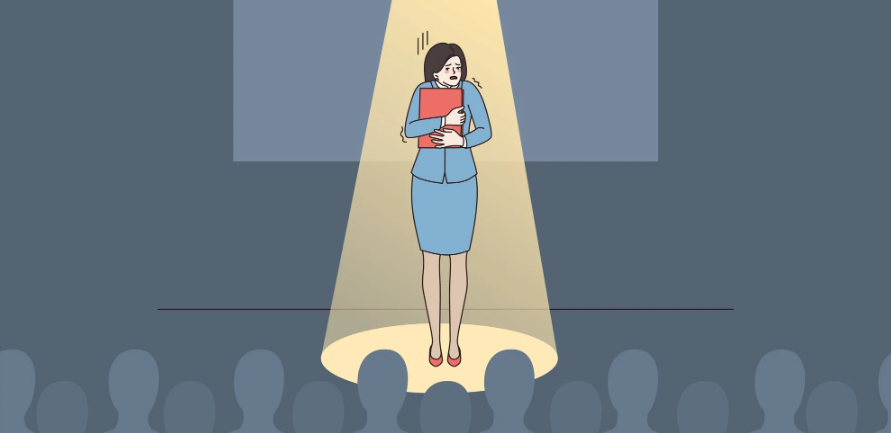

You stand behind the curtain or sit before your laptop screen, your heart races against your ribs, your palms feel damp. This experience defines performance anxiety for many of us. This is not restricted only to athletes or actors, it shows up in social gatherings, private conversations or in the middle of a presentation at school. I spent years fighting performance anxiety before I understood its roots.
The anxiety feels like a shadow that grows longer as the stakes get higher. You might recognize the sudden dry mouth or the way your mind goes blank when someone asks you a question. These are the hallmarks of performance anxiety. Understanding how performance anxiety functions is the first step toward reclaiming your confidence. When we look at this type of anxiety through a personal lens, we see it is a natural response to perceived pressure.
Performance anxiety thrives in the gap between your expectations and your self-perception, it whispers that you are not enough, it tells you that every eye in the room focuses on your smallest flaw.
Over time, it can shrink your world. You start saying no to opportunities, you avoid the spotlight. This response is a defense mechanism, but it eventually becomes a prison. To break free, you must dissect the components. You must look at the physical, mental, and emotional layers that sustain this state of high tension.
The Physical Toll of Performance Anxiety
My journey began in school. I remember the cold sweat and the trembling hands. These physical symptoms of performance anxiety are your body’s way of preparing for a threat. Your brain triggers the fight or flight response even when there is no physical danger.
Adrenaline floods your system. You might feel dizzy or nauseated. This physical manifestation makes it hard to focus on the task at hand. I used to think my body was failing me. In reality, my body was trying to protect me from social judgment. Recognizing these sensations as mere energy can change your relationship with performance anxiety. Instead of fearing the racing heart, try to see it as your body gearing up for action.
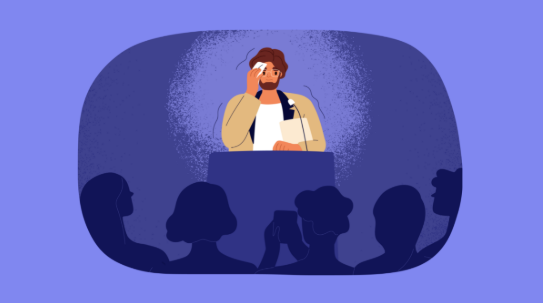
The physiological aspect is often the most intrusive part. It creates a feedback loop. You feel your heart race, which makes you more anxious, which then makes your heart race even faster. This cycle can lead to panic if left unchecked. I learned to ground myself by noticing my feet on the floor.
This simple act of grounding helps interrupt the somatic signals. You are essentially telling your nervous system that you are safe in the present moment. Many people find that their performance anxiety manifests as digestive issues or tension headaches. These are real physical responses to the stress. By addressing the body first, you create a stable foundation to address the mind.
Why Perfectionism Fuels your Performance Anxiety
I used to believe that being perfect would cure this. I thought if I never made a mistake, I would never feel afraid. This mindset actually fed my performance anxiety more than anything else. Perfectionism and performance anxiety are closely linked. When you demand perfection, you increase the pressure on every action.
You view a small slip as a total failure. This all or nothing thinking creates a constant state of high alert. To manage, you must learn to accept imperfection. I had to learn that my worth did not depend on a flawless delivery. Shifting your focus from the outcome to the process helps lower the intensity of performance anxiety.
Perfectionism creates a rigid standard that no human can consistently meet. This creates a permanent state of performance anxiety because you are always on the verge of failure. I started practicing deliberate imperfection to desensitize myself. I would intentionally make a small mistake in a low-stakes conversation.
The world did not end. This helped break the link between my performance anxiety and my self-worth. When you allow yourself to be human, the weight begins to lift. You realize that your audience, whether it is one person or a hundred, usually identifies more with your humanity than your polished facade. This connection is the ultimate cure.
The Role of Social Anxiety in Performance Settings
Often, performance anxiety is a specific branch of social anxiety. You fear being judged or humiliated by others. This fear of evaluation is the core. When I spoke in public, I wasn’t just worried about the words. I was worried about what the audience thought of me.
This social evaluative threat triggers intense performance anxiety. You might find yourself scanning the room for signs of boredom or disapproval. This hyper-vigilance makes it worse. By realizing that most people are focused on themselves, you can begin to loosen the grip. People generally want you to succeed. They are not waiting for you to fail.
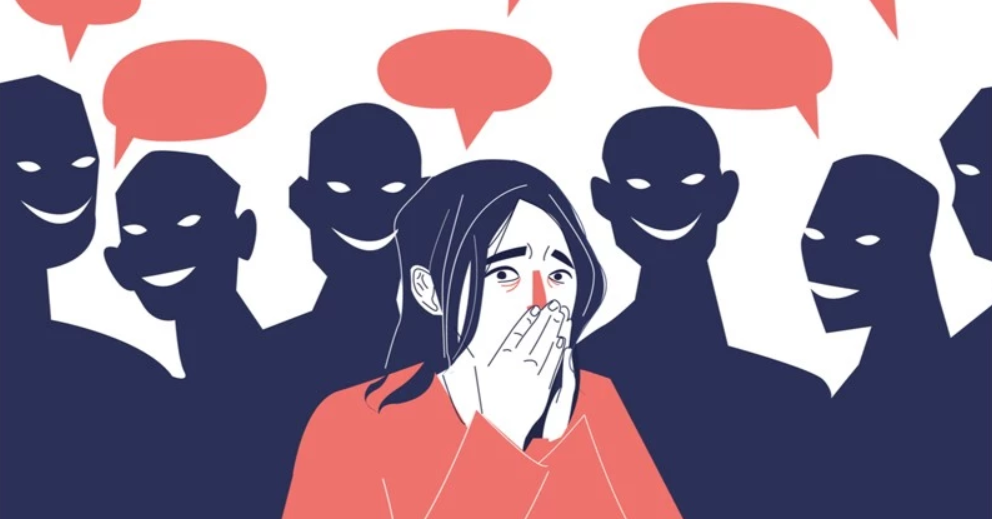
We often overestimate how much others notice our internal state. This is known as the spotlight effect. I used to think everyone could see my hands shaking. In reality, most people were too busy thinking about their own lives to notice. Understanding this cognitive bias is a key step in dismantling performance anxiety.
When you stop performing for an imaginary critic, it loses its audience. You can focus on the message you want to share rather than the way you are being perceived. This shift from self-monitoring to task-focus is a hallmark of managing performance anxiety effectively.
Breaking the Cycle of Avoidance
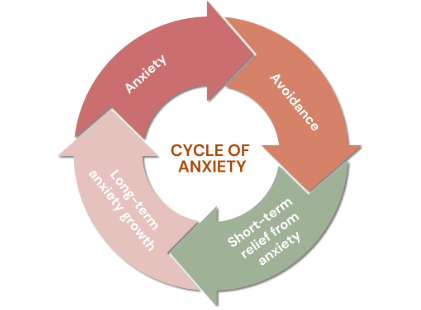
For a long time, I dealt with it by avoiding any situation that triggered it. I turned down promotions and skipped social events. Avoidance provides temporary relief but strengthens performance anxiety in the long run. When you avoid the thing you fear, your brain learns that the situation is truly dangerous.
This reinforces the cycle of anxiety. To overcome it, you must face the situations that scare you. I started with small, low-stakes interactions. Each successful moment built a layer of resilience against it. Exposure is a powerful tool. It teaches your nervous system that you can handle the discomfort of performance anxiety.
The more you hide from this problem, the larger it grows in your imagination. It becomes a monster that lives behind every door. When I finally started saying yes, I realized that the anticipation of performance anxiety was often worse than the event itself.
This realization is common among those who struggle with stage fright or public speaking. You spend days or weeks in a state of anticipatory performance anxiety, only to find it lasts only a few minutes. By reducing the time you spend in anticipation, you reduce the overall burden.
Cognitive Strategies for Managing Performance Anxiety
Changing how you think is vital for dealing with performance anxiety. I used to have a loud inner critic. That voice told me I would fail before I even started. To combat this, I started using cognitive behavioral techniques.
I challenged my negative thoughts. Instead of thinking I will mess up, I told myself I am prepared. This shift in internal dialogue reduces the power. You can replace what if scenarios with factual statements. Preparation also acts as a shield. When you know your material, performance anxiety has less room to grow. Practice until the actions become second nature.
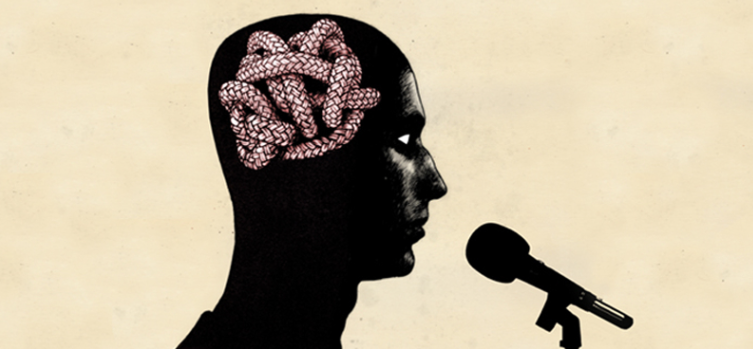
Identifying common thought distortions is helpful. For example, catastrophizing is a frequent companion. You imagine the worst possible outcome and treat it as a certainty. I started asking myself what the most likely outcome was. Usually, the most likely outcome is that things will go fine, even if they aren’t perfect.
This grounding in reality saps the strength of performance anxiety. Another strategy is to re-label the feeling. Instead of saying I am anxious, say I am energized. Since the physical symptoms of excitement and performance anxiety are nearly identical, this re-labeling can trick your brain into a more positive state.
| Phase of Performance | Symptom of Performance Anxiety | Management Strategy |
| Preparation | Procrastination, Over-rehearsing | Set strict time limits for practice |
| Anticipation | Insomnia, Racing thoughts | Mindfulness and scheduled worry time |
| The Event | Trembling, Memory gaps | Grounding exercises and deep breathing |
| Post-Event | Rumination, Self-criticism | Objective review and self-compassion |
The Importance of Mindful Breathing
When it hits, your breathing becomes shallow. This sends a signal to your brain that you are in danger. I found that box breathing is one of the most effective ways to calm performance anxiety.
By slowing your breath, you manually override the stress response. You tell your nervous system to calm down. I use this technique minutes before I have to perform. It centers my mind and settles the jitters associated with it. Deep breathing creates a sense of internal safety. It allows you to stay present in the moment rather than getting lost in future worries.
Breathing is the only part of the autonomic nervous system that we can consciously control. This makes it your most powerful weapon against performance anxiety. When I feel the wave of performance anxiety rising, I focus entirely on the sensation of air entering and leaving my lungs.
This anchors me. It prevents the mental spiral that usually accompanies performance anxiety. Practicing these techniques during calm times ensures they are available when it strikes. It is like training for a marathon; you need the stamina before the race begins.
Visualizing Success to Counter Performance Anxiety
Athletes often use visualization to improve their performance. You can use it to manage as well. I spent time imagining myself succeeding. I would picture the room, the people, and my own calm demeanor.
This mental rehearsal helps desensitize you to the triggers of performance anxiety. Your brain begins to associate the task with success rather than fear. Visualization techniques build mental muscle memory. When the actual event arrives, your brain feels like it has been there before. This familiarity reduces the shock.
Visualization should be detailed to be effective. Don’t just imagine the end; imagine the middle. Imagine how you will handle a mistake if it happens. Seeing yourself recover from a slip-up is more powerful for curing it than imagining a perfect run.
It builds confidence in your resilience. I used to visualize the worst case and then visualize myself surviving it. This took the teeth out of my performance anxiety. It proved to me that even if the worst happened, I would still be okay.
Building a Support System for Mental Health
You do not have to face this alone. I found great comfort in talking to friends and mentors about my struggles. Many people experience performance anxiety but rarely talk about it.
Seeking professional help through therapy for anxiety is also a brave and effective choice. A therapist can provide specific tools tailored to your experience with performance anxiety. Knowing you have a safety net makes the leap into high-pressure situations feel less daunting. Community and connection are powerful antidotes.
Sharing your experience can also help others. When I started being honest about my nerves, I found that almost everyone I respected felt the same way. This normalized performance anxiety for me. It wasn’t a personal defect; it was a shared human experience.
This collective understanding is vital. If we keep our performance anxiety a secret, it remains a source of shame. When we speak it aloud, it becomes a manageable challenge. Support groups or even just a trusted friend can provide the external perspective needed to keep it in check.
Developing a Pre-performance Routine
Consistency is a great enemy of performance anxiety. I developed a specific routine that I follow before every high-stakes event. This routine acts as a signal to my brain that I am in control. My routine includes a specific playlist, some light stretching, and five minutes of quiet reflection.
This structure leaves less room to creep in. When you have a plan, your brain focuses on the steps of the plan rather than the fear of the outcome. A pre-performance routine creates a psychological warm-up period.
Your routine should be personal. Some people need high energy to burn off the adrenaline. Others need total silence. I experimented with different approaches until I found what settled my performance anxiety best.
The key is repetition. Over time, the routine itself becomes a comfort. It triggers a state of flow where it cannot survive. By the time I finish my routine, I am no longer thinking about it; I am ready to work.
Long-term Resilience against Performance Anxiety
Recovering from this is not a linear process. You will have good days and bad days. I had to learn to be patient with myself. Some days, my performance anxiety felt non-existent. Other days, it returned with a vengeance.
The goal is not to eliminate it forever, but to increase your capacity to handle it. Developing emotional resilience means you can bounce back after a difficult experience. Don’t let one bad day define your progress.
I keep a journal of my wins over performance anxiety. Looking back at times I felt terrified but succeeded anyway gives me strength. It serves as evidence that my performance anxiety is a liar. It reminds me that I have survived 100% of my worst days.
This historical record is a powerful tool against the recency bias of performance anxiety. When it tells you that you can’t do it, your journal proves that you already have. By documenting the journey, you turn it into a teacher.
Embracing the Nervous Energy
What if we stopped viewing it as an enemy? I began to see my performance anxiety as a source of fuel. That surge of adrenaline is just energy waiting to be used. When I reframe it as readiness, my performance actually improves.
This concept is supported by the Yerkes-Dodson Law, which suggests that a certain amount of arousal is necessary for peak performance. Without any performance anxiety, you might be listless or uninspired.
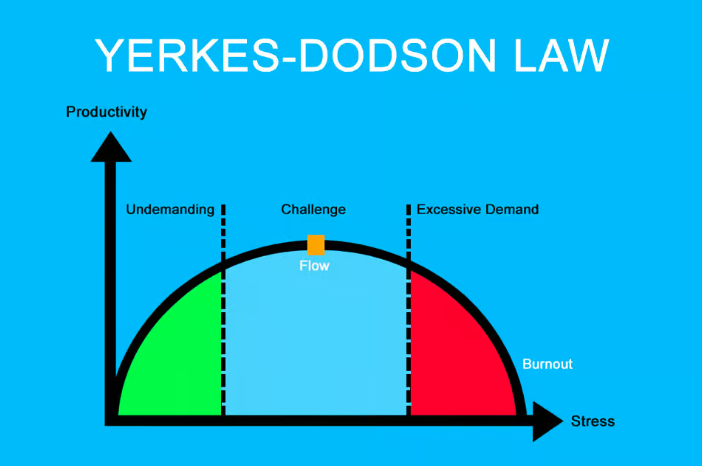
Harnessing this energy requires a shift in perspective. You are not a victim of it; you are a powerhouse of potential. I tell myself my body is giving me the energy I need to do something important.
This transforms the dread into a sense of purpose. It takes practice, but eventually, the symptoms become the green light for action. You start to look for that spark because you know it means you are about to do something that matters. This perspective shifts the power dynamic between you and performance anxiety.
Finding Balance and Moving Forward
It might always be a part of your life, but it does not have to control you. I have learned to live alongside my performance anxiety. I see it as a sign that I care about what I am doing. When you reframe it as excitement, its impact changes.
You can use that nervous energy to fuel your passion. Continue to push your boundaries. Every time you act despite your performance anxiety, you become stronger. Trust in your ability to handle whatever happens. Your value is not defined by a single moment. It is defined by your willingness to show up and try again.
Living a full life requires us to step into the unknown. It is often the price of admission for growth. I no longer wait for it to go away before I act. I act while the performance anxiety is present.
This is the definition of courage. As you move forward, remember that you are more than your fears. You are a complex, capable person who is learning to navigate the world. Performance anxiety is just one part of your story, not the whole book. Keep writing, keep performing, and keep showing up for yourself.
A Final Note on Growth
The journey with performance anxiety is deeply personal. It reflects our deepest desires to be seen and accepted. By confronting performance anxiety, you are doing more than just improving your skills; you are healing your relationship with yourself.
You are learning that you are safe even when you are vulnerable. This lesson carries over into every area of life. The confidence you build by managing performance anxiety will serve you in your relationships, your health, and your happiness.
Be kind to yourself as you navigate this path. You are doing the hard work, and that is enough. Performance anxiety taught me that I am capable of more than I imagined. It can teach you the same.