
Feng Shui, an ancient Chinese art and science, is more than just interior decorating; it is about creating harmony and balance in your living environment to support your well-being. The literal translation of Feng Shui is “wind and water,” elements associated with health and fortune. It is a complex body of knowledge that reveals how to balance the energies of a space to ensure the health and good fortune for the people inhabiting it.
When your home’s energy, or “chi,” flows smoothly, it can positively impact every aspect of your life, from your career and relationships to your health and overall happiness. In today’s fast-paced world, our homes have become sanctuaries, and optimizing their energy is a powerful tool for personal growth and peace.
This article will guide you through the fundamental principles of Feng Shui, helping you understand how to apply them to your own living space and cultivate a more supportive and harmonious home environment. By making conscious choices about your home’s layout, decor, and energy, you can unlock its potential to nurture your success and well-being.
Understanding the Bagua Map and its Importance
The Bagua map is one of the most fundamental tools in Feng Shui. It is an octagonal grid that corresponds to nine specific life areas, each associated with a particular compass direction, element, color, and aspect of your life.
When overlaid onto the floor plan of your home, the Bagua map reveals which areas of your house correspond to which life aspirations. For instance, the Wealth and Prosperity area is often located in the far left corner when looking into your home from the main entrance, while the Love and Relationships area is typically in the far right corner.
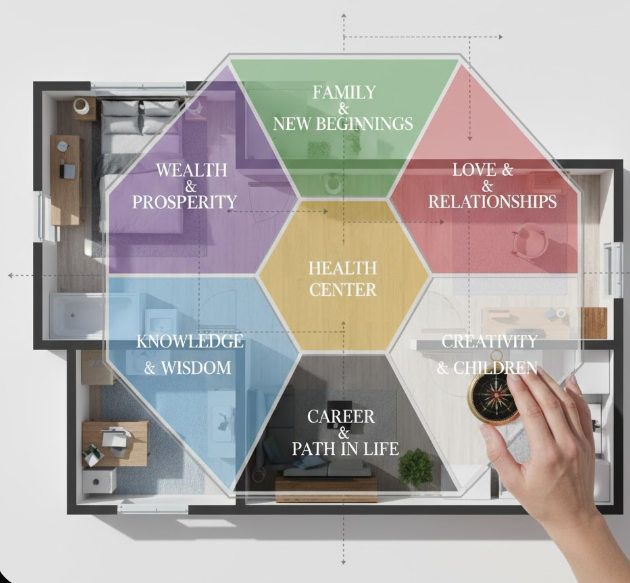
Understanding how to use the Bagua map is crucial for identifying areas in your home that might need attention to support specific life goals. To accurately apply the Bagua, you will first need a floor plan of your home. You can learn more about how to draw a floor plan and then proceed to overlay the Bagua.
Each section of the Bagua represents a different area of your life, such as career, knowledge, family, wealth, fame, relationships, creativity, helpful people, and health. By activating and balancing the energy in these specific areas, you can enhance those aspects of your life. For example, if you wish to improve your career prospects, you would focus on the Career area of your home, ensuring it is clutter free and decorated with elements that represent success and forward movement. This ancient map acts as a blueprint, guiding your organizational and decorative choices to create a home that truly supports your aspirations.
Decluttering: the First Step to Good Feng Shui
Before you even begin to think about colors or furniture placement, the most critical step in applying Feng Shui is decluttering. Clutter creates stagnant energy, preventing fresh chi from flowing freely through your home. It can also lead to mental clutter, stress, and a feeling of being overwhelmed.
Think of clutter as energetic roadblocks that impede progress and opportunity in your life. A cluttered space can feel suffocating and draining, whereas a clean and organized home promotes clarity and peace. This principle applies to every room, from your kitchen to your bedroom. Start with one area at a time, perhaps a drawer or a single shelf, and be ruthless in your decisions. Ask yourself if each item serves a purpose, brings you joy, or holds sentimental value. If not, it is time to let it go.
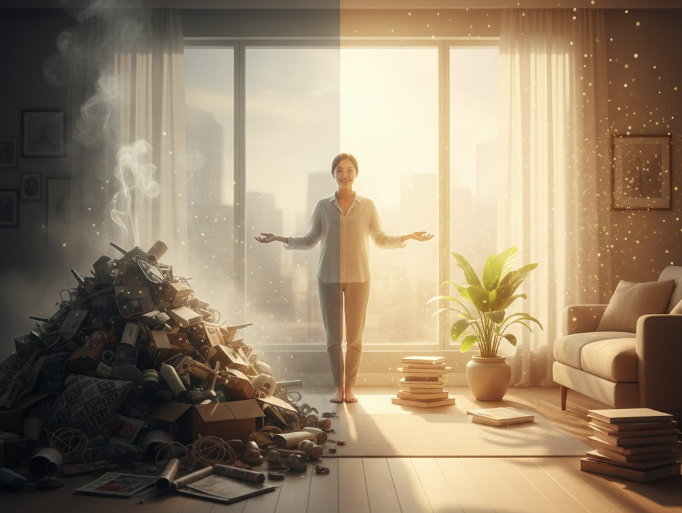
Embracing a minimalist approach can significantly improve the flow of energy in your home and, consequently, in your life. For tips on how to effectively declutter your home room by room, explore our comprehensive guide. Remember, decluttering is not just about tidiness; it is about creating space for new opportunities and positive energy to enter your life.
Harnessing the Power of the Five Elements
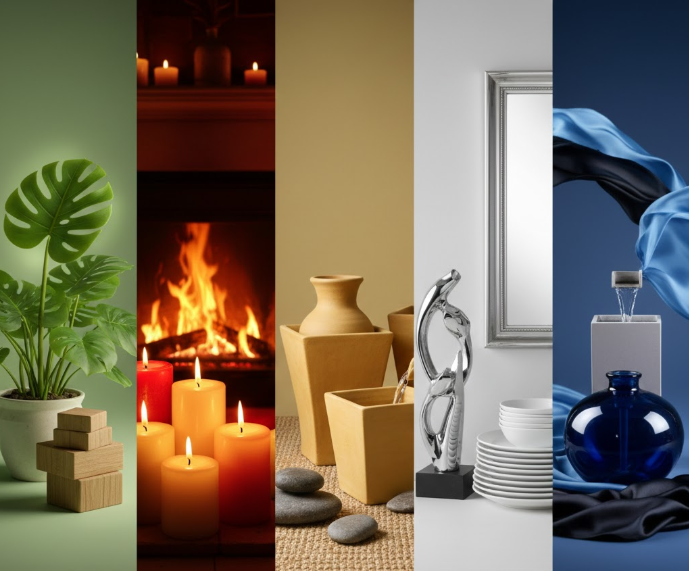
Feng Shui is deeply rooted in the concept of the five elements: Wood, Fire, Earth, Metal, and Water. Each element represents different qualities and energies, and understanding how they interact is key to creating balance in your home.
Wood
Symbolizes growth, new beginnings, and vitality, often represented by plants, wooden furniture, and green colors.
Fire
Embodies passion, energy, and transformation, brought in through candles, red hues, and pointed shapes.
Earth
represents stability, grounding, and nourishment, found in ceramics, square shapes, and earthy tones.
Metal
Signifies clarity, precision, and organization, seen in metallic objects, white and grey colors, and circular forms.
Water
Symbolizes wisdom, introspection, and flow, represented by mirrors, fountains, blue and black colors, and wavy shapes.
The goal is to create a harmonious balance of these elements in each room, ensuring none overpower the others. For example, a room with too much Fire might feel overly stimulating, while one with too much Water could feel melancholic.
You can learn more about how to balance the elements in your living space to optimize energy flow. By consciously incorporating objects, colors, and materials that represent each element, you can fine tune the energy of your home to support specific intentions and create a truly harmonious environment.
Optimizing Specific Rooms for Better Feng Shui
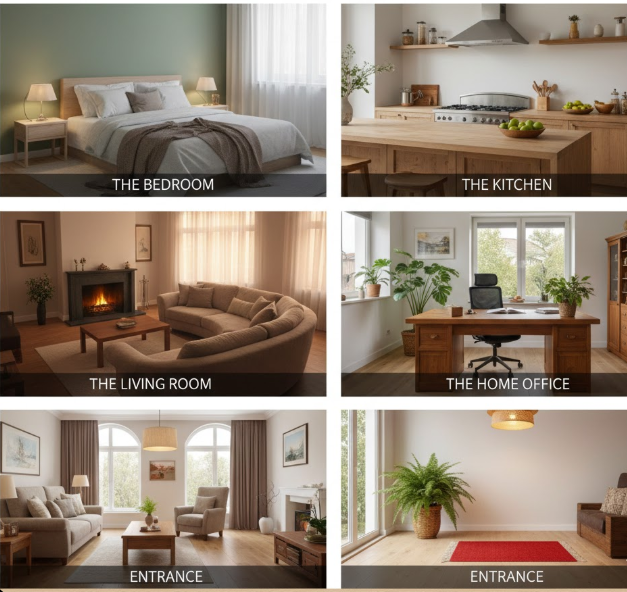
While the Bagua map provides an overall guide, each room in your home has its own unique energy and purpose. Applying Feng Shui principles to specific rooms can significantly enhance their functionality and the quality of life within them.
The Bedroom: Sanctuary for Rest and Romance
Your bedroom should be a haven of peace and rejuvenation. Position your bed so that you have a solid wall behind it and can see the door without being directly in line with it. This is known as the commanding position. Avoid placing your bed under a window or directly facing a mirror, as these can disrupt sleep and drain energy. Choose soothing colors, soft lighting, and minimal electronics to promote relaxation. For more detailed advice on creating a Feng Shui bedroom, check out our dedicated article.
The Kitchen: the Heart of Nourishment
The kitchen represents wealth and health. Keep it clean, organized, and free of clutter. Ensure your stove, which symbolizes prosperity, is always clean and in good working order. Avoid placing the stove directly opposite the sink or refrigerator, as this can create a conflict between Fire and Water elements. A bowl of fresh fruit on the counter can symbolize abundance.
The Living Room: Fostering Connection and Gathering
The living room is where you connect with family and friends. Arrange furniture to encourage conversation and comfortable gathering. Avoid sharp corners pointing at seating areas. Introduce elements that promote warmth and hospitality, such as comfortable throws, soft lighting, and natural textures.
The Home Office: Boosting Career and Productivity
In your home office, position your desk in the commanding position, facing the door but not directly in line with it. Ensure your workspace is clutter free and inspiring. Incorporate elements that support focus and growth, such as a sturdy chair, good lighting, and perhaps a healthy plant. For more ideas on how to set up a productive Feng Shui home office, read our guide.
The Entrance: The Mouth of Chi
The main entrance of your home is crucial as it is where chi enters. Keep it well lit, clean, and inviting. A clear pathway to your front door, a vibrant doormat, and perhaps a healthy plant can all enhance the flow of positive energy into your home.
Curating Colors and Materials for Optimal Energy
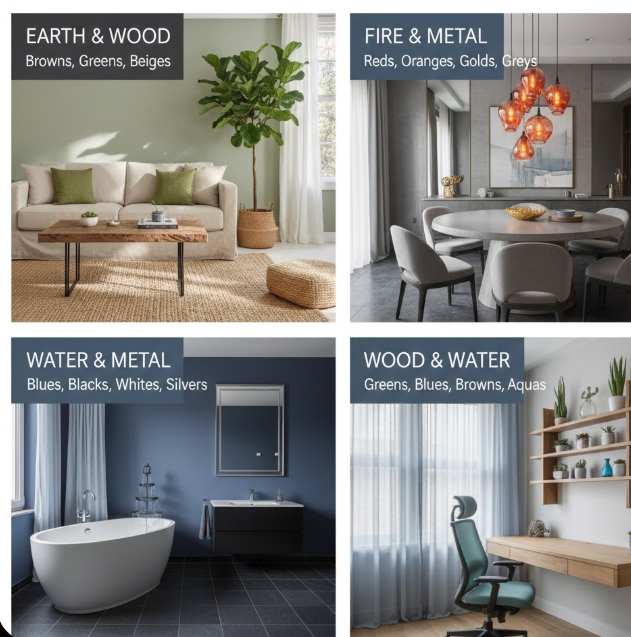
Colors and materials play a significant role in Feng Shui, as they are direct representations of the five elements and can evoke specific emotions and energies. Choosing the right palette and textures for each room can profoundly impact its overall feel and function.
Colors: Each Hue Has a Story
- Green and Brown (Wood): Ideal for areas where you desire growth, vitality, and new beginnings, such as a home office or a child’s room.
- Red, Orange, Purple (Fire): Excellent for areas where you want to ignite passion, energy, or fame, like a living room or a creative space, but use sparingly in bedrooms.
- Yellow, Beige, Earth Tones (Earth): Promote stability, grounding, and nurturing, making them perfect for kitchens, dining rooms, or areas where you gather.
- White, Grey, Metallics (Metal): Encourage clarity, precision, and organization, suitable for bathrooms, kitchens, or areas where you need focus.
- Blue and Black (Water): Represent wisdom, introspection, and tranquility, making them great choices for bedrooms, meditation spaces, or bathrooms.
Materials: Texture and Energy
- Wood: Brings a sense of warmth, natural growth, and organic energy.
- Metals: Introduce strength, clarity, and a modern aesthetic.
- Ceramics and Stone: Offer grounding, stability, and an earthy feel.
- Soft Fabrics: Promote comfort, relaxation, and a sense of coziness.
Consider the dominant element of each Bagua area and choose colors and materials that either enhance that element or create a harmonious balance. For example, in a Wealth and Prosperity area associated with Wood, you might introduce rich green tones and wooden furniture, or add a touch of Water to nourish the Wood element.
For more ideas on using Feng Shui colors in your home, explore our detailed article. The thoughtful selection of colors and materials allows you to fine tune the energy of each space, creating an environment that feels both beautiful and energetically supportive.
Maintaining Positive Chi Flow: Ongoing Practices
Creating good Feng Shui is not a one-time project; it is an ongoing practice of mindful living and maintenance. Once you have decluttered, balanced the elements, and optimized your rooms, consistent effort is needed to keep the positive chi flowing. Regular cleaning and organization are paramount; a tidy home is a happy home in Feng Shui.
Pay attention to areas that tend to collect clutter and address them promptly. Ensure that all repairs are made promptly, as broken items represent stagnant or broken energy. Keep plants healthy and replace any that are wilting or dying, as they represent vital life energy. Open windows regularly to allow fresh air to circulate, and use natural light as much as possible.
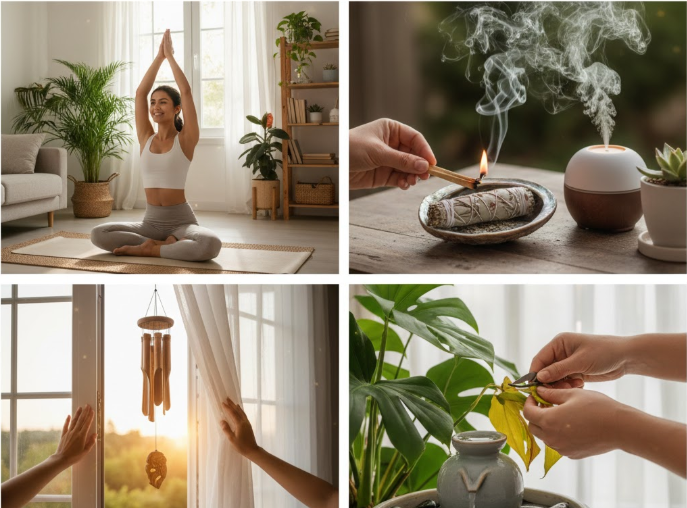
Consider incorporating subtle sound elements, such as wind chimes in appropriate areas, or playing calming music to enhance the energy. Burning sage or using essential oil diffusers can also help cleanse and uplift the atmosphere.
The goal is to cultivate a home that feels vibrant, inviting, and constantly refreshed. Regularly reassess your space and make adjustments as your life and intentions evolve. For ideas on how to maintain good energy in your home, visit our tips section.
Conclusion: Your Home, Your Harmony
Embracing Feng Shui is about more than just rearranging furniture; it is about creating a conscious connection with your living space and understanding how it influences your life. By applying the ancient wisdom of Feng Shui, you can transform your home into a powerful ally that supports your aspirations, fosters well-being, and promotes harmony in every aspect of your existence.
From understanding the Bagua map and decluttering to harnessing the power of the five elements and optimizing specific rooms, each step brings you closer to a home that truly nourishes your soul. The journey to a Feng Shui optimized home is continuous, requiring ongoing mindfulness and adaptation.
The rewards, such as a sense of peace, increased prosperity, improved relationships, and vibrant health, are immeasurable.
Start small, be patient, and enjoy the process of creating a home that not only looks beautiful but also feels deeply supportive and energetically aligned with your best life.